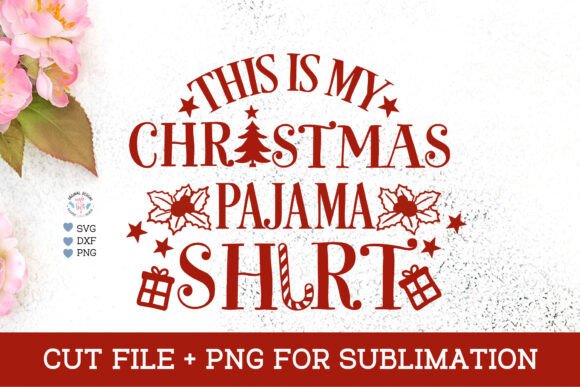
Christmas Pajama Shirt Cut File and PNG
As a designer who spends half my life staring at stitch charts and the other half trying to convince clients that "embroidery is not printing," I approach every new digital asset with a healthy dose of skepticism. We have all seen designs that look charming on a screen but turn into a tangled, dense mess once they hit the hoop. That is why I decided to put the Christmas Pajama Shirt Cut File and PNG through its paces. I wanted to see if this design truly belongs in a professional workflow or if it should remain buried in the "maybe later" folder.
The category is listed under Illustrations, which sets a specific expectation. This isn’t just a simple logo; it is a graphic representation meant to be translated into thread. My initial impression was one of cozy familiarity. The subject matter—a pajama shirt—is inherently soft, domestic, and festive. It immediately evokes feelings of holiday mornings, family traditions, and relaxed comfort. For an embroidery project, this mood is crucial because it dictates the fabric choices, the thread selection, and ultimately, the emotional response of the wearer.
Real-World Application: From Screen to Stitch
I tested this concept by imagining it on a variety of surfaces. The first scenario that came to mind was a custom sweatshirt for a holiday gift. There is something undeniably warm about embroidered pajamas on actual loungewear. When I visualized the Christmas Pajama Shirt Cut File and PNG centered on the chest of a heather grey fleece pullover, the contrast felt right. It wasn’t shouting for attention; it was inviting.
However, the versatility of this design extends far beyond sleepwear. I also considered using it for a baby item, such as a onesie or a burp cloth. In these cases, the scale becomes critical. If the design includes fine details, those lines need to hold up when scaled down. A well-executed machine embroidery design like this should retain its character even on smaller garments. The clean lines of a cut file translate well to satin stitches, which are essential for keeping edges crisp on small items where bulk can be an issue.
Another strong use case is the tote bag design. Canvas is a forgiving fabric, but it can be thick. A design with too much density might cause needle breakage or puckering. This particular illustration seems to balance detail with open space, allowing for breathability in the stitching. It works beautifully as a boutique branding element or a personalized gift tag attached to a larger package. It adds that handmade touch that customers love to see on platforms like Etsy, signaling quality and care before they even unwrap the present.
Technical Considerations for Embroidery Designers
While the aesthetic appeal is high, the technical execution is where many designers stumble. When evaluating any embroidery file, I always look at the stitch density. A design that is too dense will create a stiff, plastic-like feel, ruining the drape of the fabric. Conversely, a design that is too sparse may not cover the base fabric adequately, leading to a patchy appearance. The Christmas Pajama Shirt Cut File and PNG appears to strike a reasonable balance, likely utilizing a mix of fill stitches for the body of the shirt and satin stitches for the outlines and trim details.
Thread color contrast is another vital factor. Embroidery relies heavily on light and shadow to create depth. On dark fabrics, you need bright, saturated threads to make the design pop. On light fabrics, you have more freedom but must ensure that the shading tones don’t blend together. I recommend testing this design in black and white mockups first. This helps you identify areas where the tonal values might clash or become indistinguishable once stitched. If the grayscale version looks muddy, the colored version will likely suffer from the same lack of clarity.
Furthermore, consider the fabric texture. This design pairs naturally with soft materials like cotton jersey, fleece, or flannel. However, caution is advised when working with stretchy fabrics. Without proper stabilizer support, the tension of the stitches can distort the knit, causing the pajama shirt graphic to warp. Always use a tear-away or cut-away stabilizer depending on the weight of your material. For delicate fabrics, a water-soluble topping can help prevent the needle from pulling loops out of the weave, ensuring a clean finish.
Where to Exercise Caution
No design is perfect for every situation. There are specific scenarios where the Christmas Pajama Shirt Cut File and PNG might require adjustments or careful handling:
- Small Hoop Sizes: If you are working with very limited hoop space, intricate details in the cuffs or collar of the pajama shirt might get lost. Simplify the design or scale it up if possible.
- Textured Fabrics: Materials like terry cloth or heavy wool can obscure fine stitching. The definition of the satin stitch edges may be reduced on these surfaces.
- Curved Surfaces: While this design could work on a cap, the flat nature of a pajama shirt graphic might not follow the curve of a hat brim well. It is better suited for flat panels like aprons, pillow covers, or the front of a sweatshirt.
- Dense Stitch Areas: Avoid placing this design over existing seams or pockets where the fabric is already layered and thick. This increases the risk of needle deflection and uneven tension.
Impact on Product Value and Brand Consistency
For Etsy sellers and small shop product creators, the presentation of the design is as important as the design itself. A high-quality digital embroidery file allows you to offer personalized products at a premium price point. Customers are willing to pay more for items that feel unique and crafted. The Christmas Pajama Shirt Cut File and PNG lends itself well to personalization—adding a name, a date, or a short message transforms it from a generic graphic into a cherished keepsake.
This level of customization builds customer trust. When a buyer sees that you have taken the time to embroider a specific design rather than using a cheap heat transfer vinyl, they perceive higher value. It aligns with the ethos of the craft business community, where authenticity and skill are highly valued. Moreover, consistent use of well-chosen designs helps establish a recognizable brand identity. If your shop specializes in cozy, festive home goods, this design fits perfectly into that narrative.
Final Thoughts for the Maker
Before committing to a full production run, I strongly advise testing the Christmas Pajama Shirt Cut File and PNG on scrap fabric. Check the hoop size compatibility, inspect the stitch density for any potential issues, and verify that the thread colors you plan to use provide sufficient contrast against your chosen fabric. Also, remember to review the licensing terms. Ensure you have the right to sell finished items made from this design, especially if you are operating a commercial enterprise.
Ultimately, this design offers a charming, versatile option for holiday-themed projects. It captures the spirit of the season while remaining technically feasible for most modern embroidery machines. Whether you are creating a personalized gift for a loved one or adding a new listing to your online store, this illustration provides a solid foundation for a successful embroidery project. It is a reminder that sometimes, the best designs are the ones that simply make us feel good—and what feels better than a cozy pair of pajamas on a winter morning?